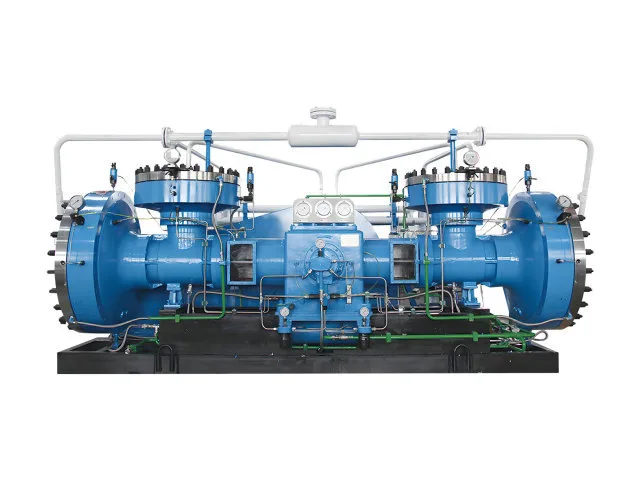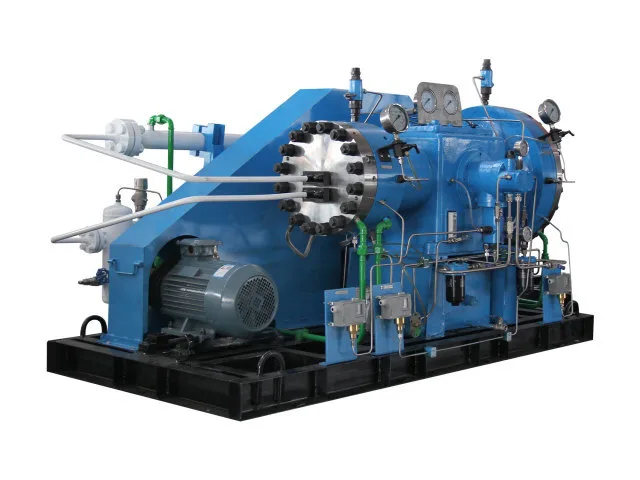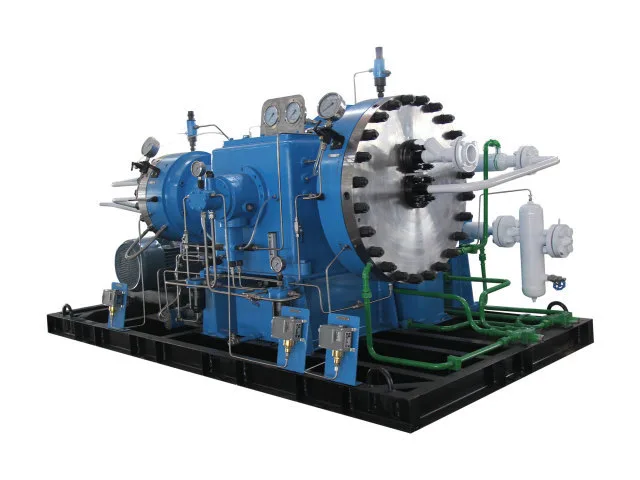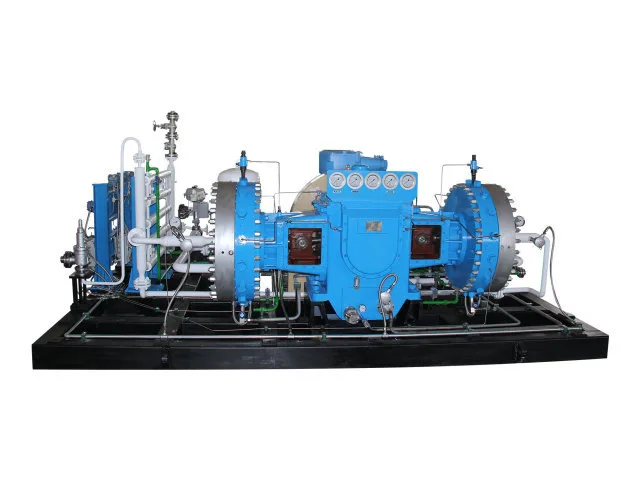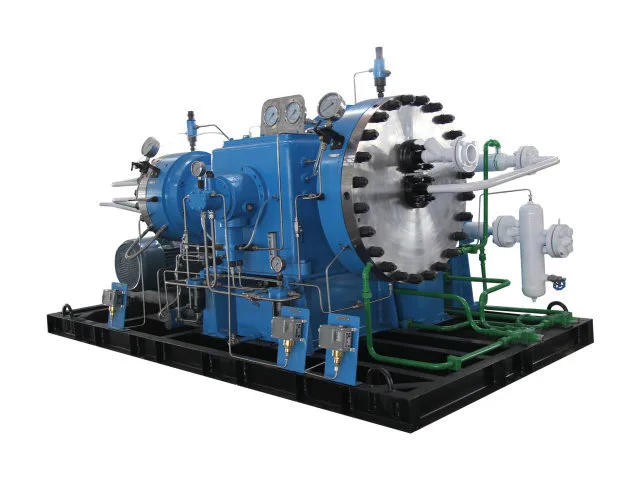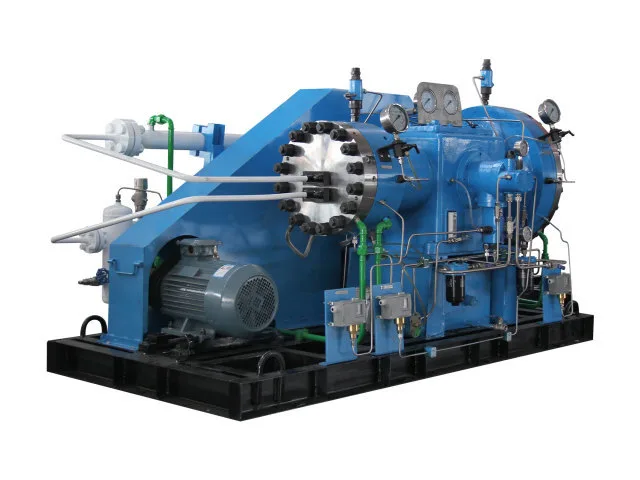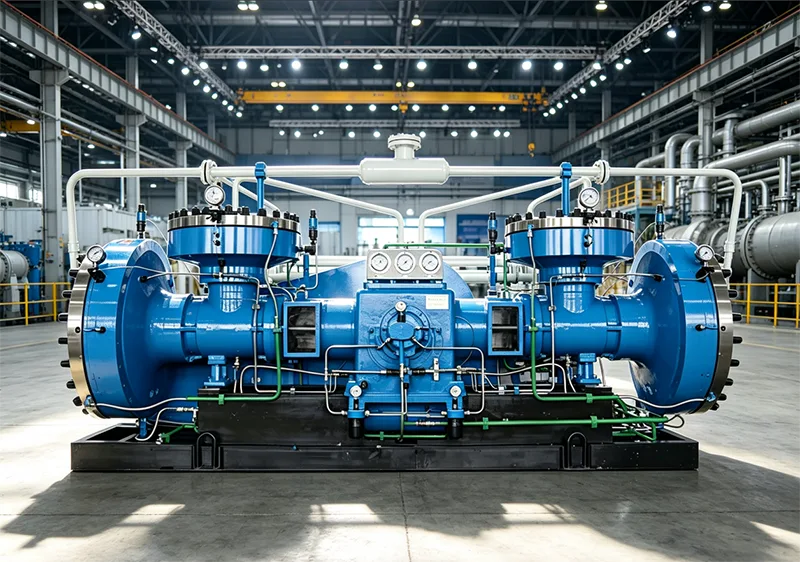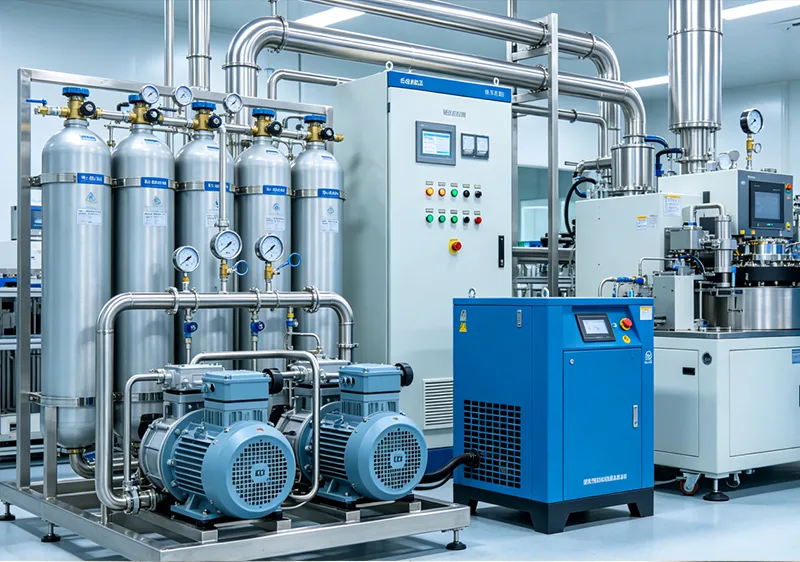
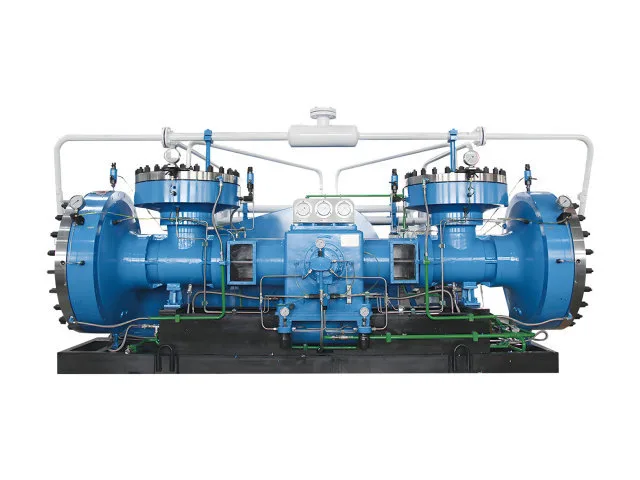
Gas separation is an important consideration when compressing high-purity or special gases. In the D Membrane Compressor, a diaphragm separates the process gas from the hydraulic and lubrication side of the compressor. Gas compression takes place through the movement of the diaphragm rather than through direct piston contact with the gas chamber, helping prevent direct contact between the process gas and lubricating oil.
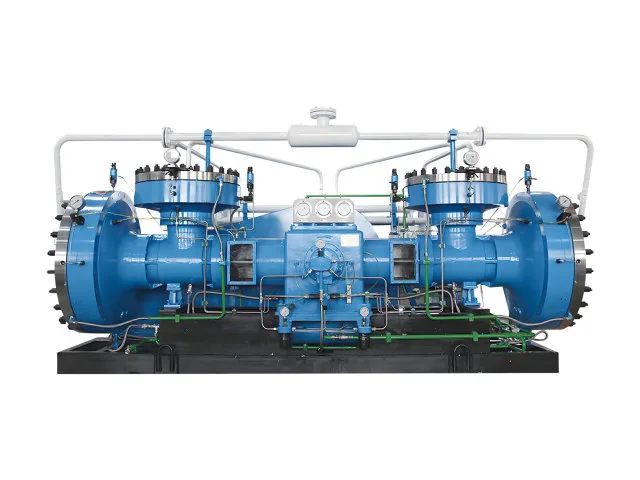
The main structural feature of a membrane compressor is the separation between the compressed gas and the hydraulic drive system.
In a conventional piston compressor, the piston operates directly inside the gas cylinder. A membrane compressor takes a different approach. The diaphragm forms a barrier between the gas chamber and the hydraulic side. The diaphragm moves under hydraulic drive and transfers the compression movement to the gas without requiring direct contact between the process gas and the lubricating system.
This arrangement is particularly relevant when the gas being compressed needs to be kept separate from the oil or hydraulic system.
The D Membrane Compressor uses a two-stage compression arrangement. Rather than applying the complete pressure increase in one compression step, the gas passes through two compression stages. This arrangement allows the available models to cover different combinations of inlet pressure, outlet pressure, and gas flow.
|
Model |
Inlet pressure MPa(G) |
Outlet pressure MPa(G) |
Nominal volumetric flow rate (Nm3/h) |
Power (KW) |
Speed (r/min) |
Dimension L*W*H(mm) |
|
GD-1000/15-220 |
1.5 |
22 |
1000 |
185 |
420 |
6800*3900*2300 |
|
GD-670/12-220 |
1.2 |
22 |
670 |
160 |
420 |
6800*3900*2300 |
|
GD-400/3-220 |
0.3 |
22 |
400 |
185 |
420 |
6500*4200*2500 |
|
GD-2710/9.6-16 |
0.4 |
13.5 |
2710 |
132 |
420 |
5000*3700*2500 |
|
GD-649/5.5-28 |
0.55 |
2.8 |
649 |
75 |
420 |
4500*3000*2000 |
|
GD-350/0.5-3 |
0.2 |
4.5 |
200 |
55 |
420 |
4500*3000*1800 |
|
GD-180/15 |
Atmospheric pressure |
1.5 |
180 |
45 |
420 |
5000*3450*2500 |
|
GD-667/1.25-6 |
0.125 |
0.6 |
667 |
75 |
420 |
4200*3400*2500 |
|
GD-120/0.35-10 |
0.035 |
1.0 |
120 |
37 |
420 |
5070*3210*2500 |
|
GD-313/1-20 |
0.1 |
2.0 |
313 |
75 |
423 |
6800*3200*3700 |
|
GD-150/1.5-19 |
0.15 |
1.9 |
150 |
37 |
420 |
3040*2700*1540 |
|
GD-43/0.5-18.5 |
0.05 |
1.85 |
43 |
18.5 |
420 |
3100*2500*2200 |
|
GD-75/4 |
Atmospheric pressure |
0.4 |
75 |
18.5 |
415 |
3040*2700*1470 |
|
GD-30/160 |
Atmospheric pressure |
16 |
30 |
22 |
410 |
2800*1400*1400 |
|
GD-50/9-150 |
0.9 |
15 |
50 |
15 |
400 |
2500*1300*1300 |
|
GD-10/20 |
Atmospheric pressure |
2.0 |
10 |
7.5 |
410 |
2800*1800*1600 |
|
GD-50/4-60 |
0.4 |
6.0 |
50 |
18.5 |
410 |
2900*1800*1600 |
|
GD-25/30-210 |
3.0 |
21 |
25 |
11 |
500 |
2000*1280*1500 |
|
GD-20/5-150 |
0.5 |
15 |
20 |
11 |
500 |
1600*900*1400 |
The D Membrane Compressor can be configured for several categories of industrial and special gases:
High-Purity Gases
Inert Gases
Flammable and Explosive Gases
Toxic Gases
Other Special Gases
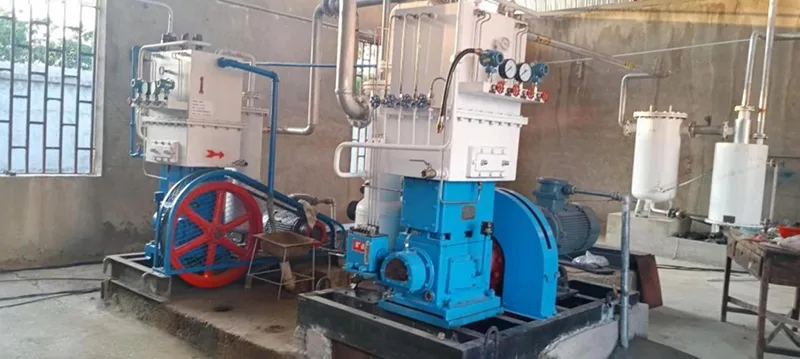
It is designed to compress high-purity, inert, flammable, explosive, toxic and other specialty gases across different flow rates and pressure requirements.
A diaphragm separates the process gas chamber from the hydraulic and lubrication system, minimizing the risk of direct contact between the gas and lubricating oil.
The process gas is isolated from the hydraulic and lubrication sides by the diaphragm. Therefore, the equipment is more accurately described as using diaphragm-separated gas compression rather than classifying the entire machine as oil-free.
The specified D Series configuration uses a two-stage compression arrangement.
The listed models cover nominal flow rates from 10 to 2,710 Nm³/h.
Selected models in the listed range have a maximum outlet pressure of 22 MPa(G).
Yes. The specified technical configuration uses a circulating water cooling system.
Address
No. 21, Hengtong Road, Tongchi Town, Zhenxing District, Dandong City, Liaoning Province
Tel