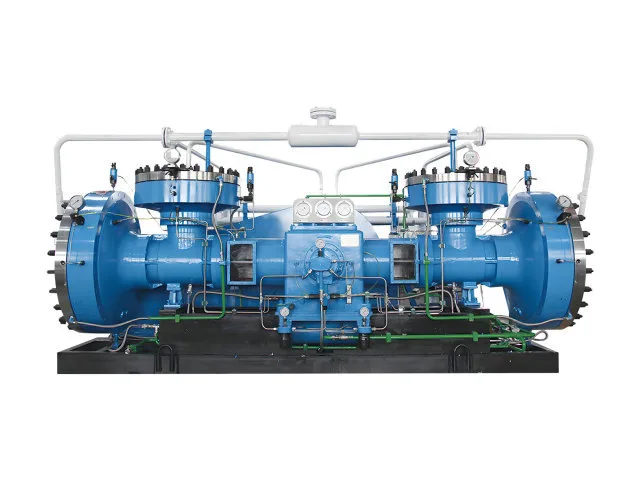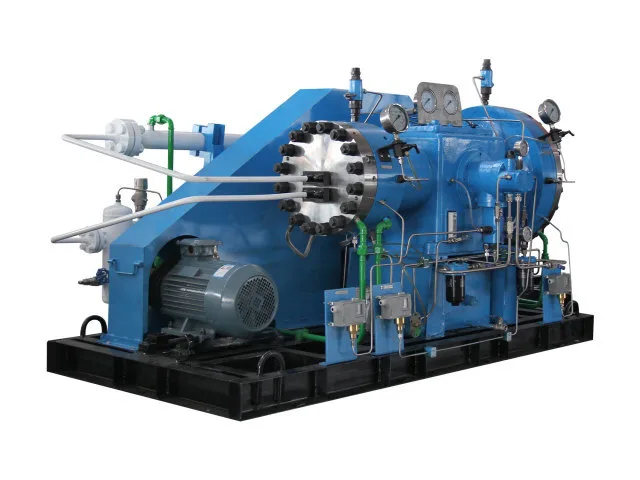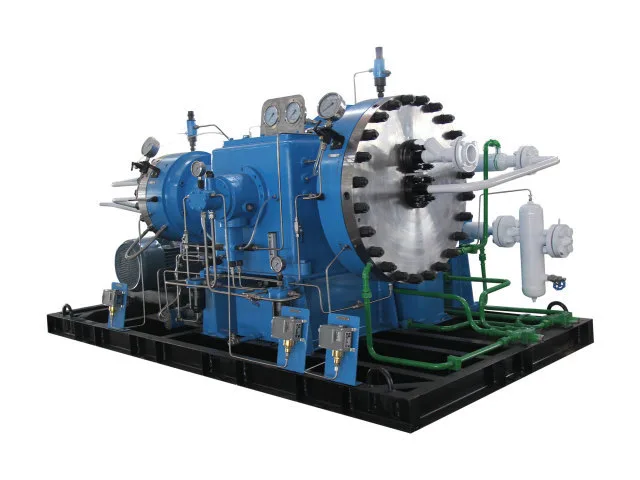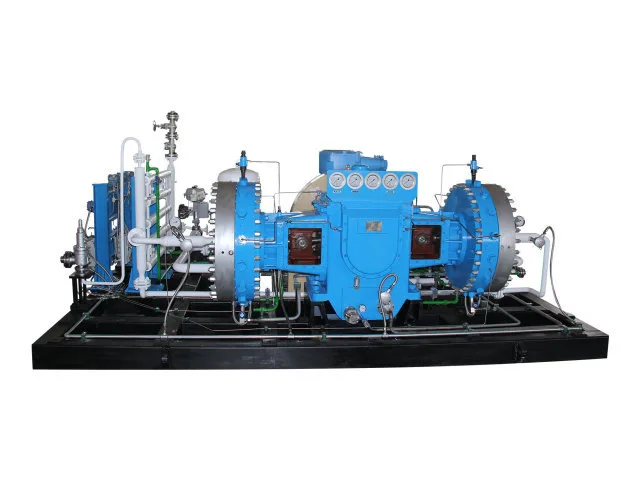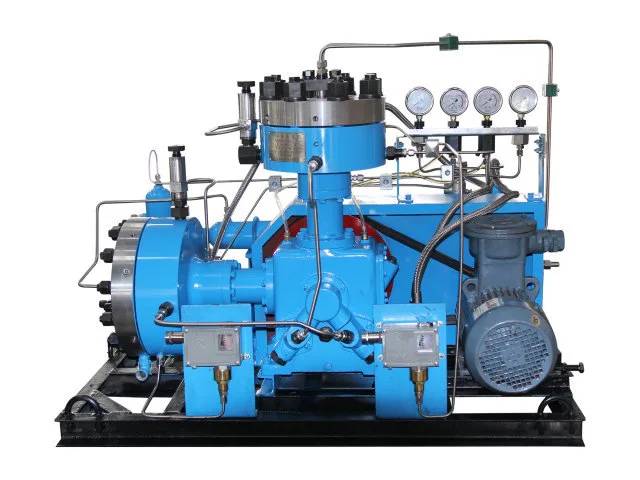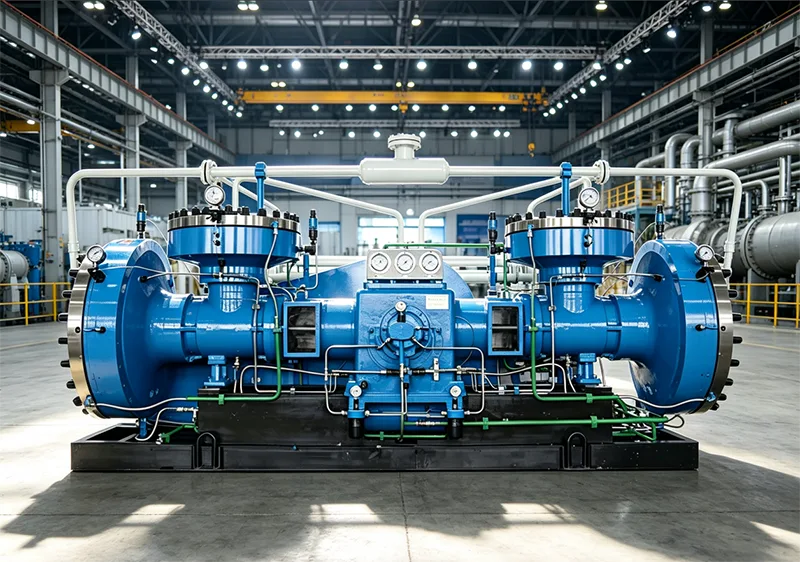
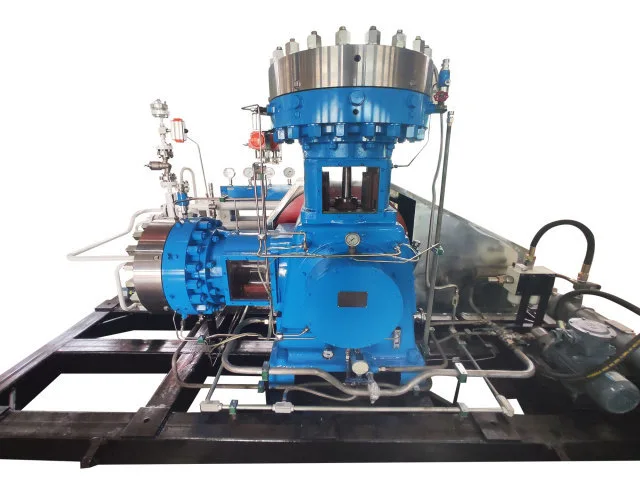
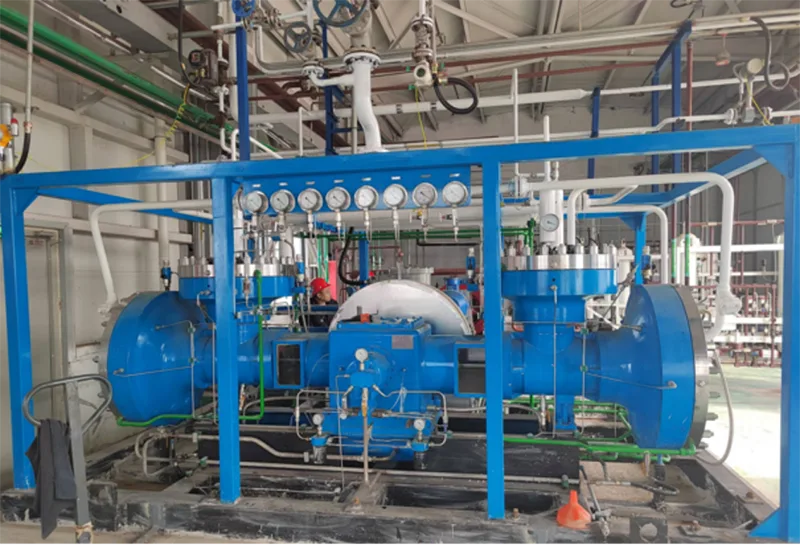
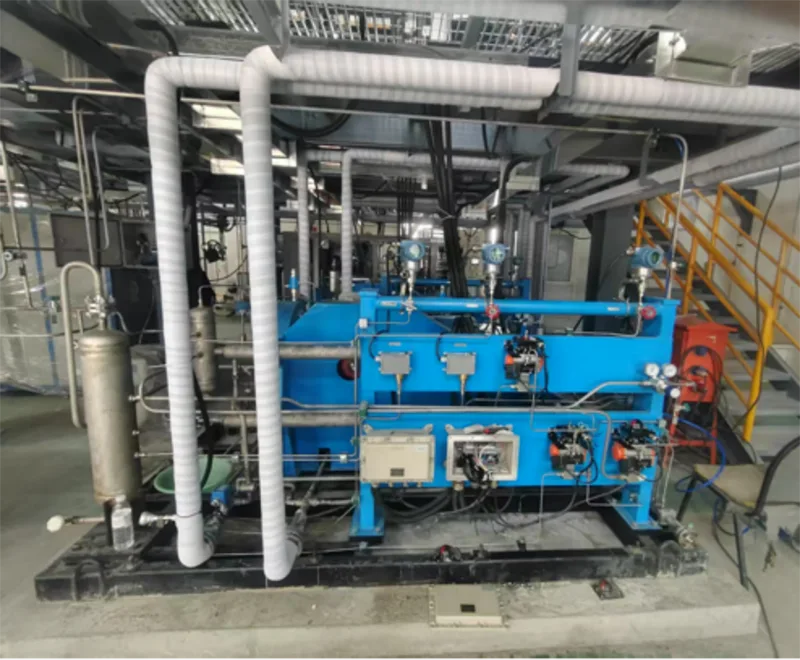
The GL4 Diaphragm Compressor combines an L-shaped mechanical layout with diaphragm gas separation technology. The motor-driven crank mechanism transfers hydraulic pressure to the diaphragm, allowing the gas to be compressed inside a sealed chamber without direct contact with lubricating oil. Compared with conventional reciprocating compression arrangements, the L-shaped configuration provides improved power balance and smoother operation, making the compressor suitable for continuous industrial gas compression where operating stability and gas cleanliness are important.
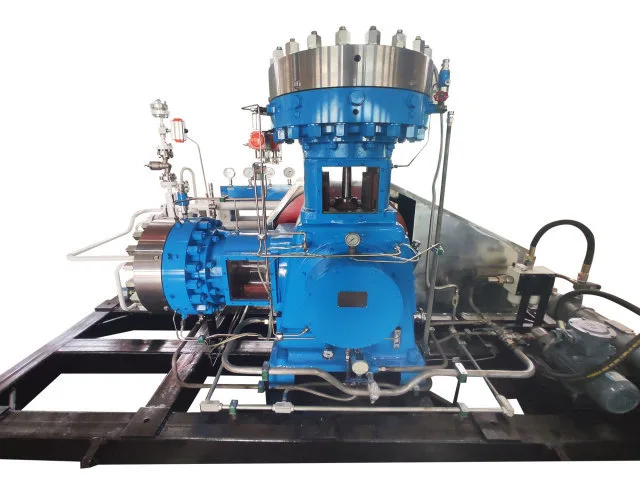
The main structural characteristic of the GL4 Diaphragm Compressor is its L-shaped cylinder arrangement. This configuration combines the operating characteristics of vertical and horizontal structures and helps improve mechanical balance during reciprocating operation.
For industrial users, this means the compressor is built around more than pressure and flow requirements. Stable movement, balanced mechanical loading, and smoother operation are also considered when selecting the GL4 series for a gas compression system.
The GL4 series uses a two-stage compression structure. Gas is compressed progressively rather than completing the full pressure increase in a single compression stage.
This arrangement supports applications where pressure requirements and gas characteristics need to be considered together. The final configuration can be selected according to suction pressure, discharge pressure, required volumetric flow, gas medium, and operating conditions.
The electric motor drives the crankshaft through the transmission system. The crankshaft converts rotary motion into the reciprocating movement of the piston inside the hydraulic oil cylinder.
As the piston moves, hydraulic oil transfers pressure to the diaphragm, causing it to move back and forth. The diaphragm movement changes the volume of the gas chamber. During the suction stroke, gas enters through the inlet valve. During the compression stroke, the chamber volume decreases and gas pressure rises. Once the required pressure is reached, the discharge valve opens and the compressed gas leaves the chamber.
A compensating oil system maintains the required hydraulic oil volume during operation. Excess oil is regulated and returned through the pressure control system, allowing the diaphragm to operate against the cylinder head as required during the compression cycle.
The compressed gas is physically separated from the hydraulic oil by the diaphragm.
This separation is one of the main reasons diaphragm compressors are used for gases that cannot tolerate contamination from lubricating oil. The process gas remains inside the sealed compression chamber and does not directly contact the lubricated drive components.
The closed cylinder chamber also supports reliable sealing performance, which is particularly important when handling high-purity gases, toxic gases, flammable gases, corrosive gases, and other special media.
The GL4 Diaphragm Compressor can be configured for applications involving:
· High-purity gases
· Inert gases
· Flammable and explosive gases
· Toxic and harmful gases
· Corrosive gases
· Rare and valuable gases
· Other special industrial gases
|
Item |
Specification |
|
Product Series |
GL4 Diaphragm Compressor |
|
Structural Form |
L-Shaped |
|
Compression Stage |
Two-Stage |
|
Cooling Method |
Circulating Water Cooling |
|
Working Voltage |
380V |
|
Pressure Type |
Intake Pressure and Exhaust Pressure |
|
Compressed Media |
High-Purity, Inert, Flammable, Explosive, Toxic and Special Gases |
|
Industry or Buyer Type |
Typical Requirement |
|
Industrial Gas Companies |
Gas compression and transfer |
|
Specialty Gas Suppliers |
Clean handling of high-value gases |
|
Petrochemical Plants |
Compression of process and special gases |
|
Chemical Manufacturers |
Sealed compression of selected chemical gases |
|
Hydrogen and Energy Projects |
Gas compression according to project conditions |
|
Electronics Industry |
High-purity gas handling |
|
Pharmaceutical and Food Gas Systems |
Applications requiring controlled gas cleanliness |
|
Research Institutions |
Laboratory and scientific gas compression |
|
Aerospace Projects |
Specialized gas compression systems |
Jinding provides technical support throughout the equipment supply process, including compressor selection, engineering consultation, equipment manufacturing, installation and commissioning support, operation and maintenance training, remote technical assistance, on-site service, equipment maintenance, repair, and spare parts supply.
For international industrial projects, the technical team can communicate with customers remotely during equipment selection and operation.
The main difference is that the diaphragm separates the compressed gas from the lubricated hydraulic drive system. The gas does not directly contact lubricating oil during compression.
The L-shaped cylinder arrangement is designed to improve power balance and operating smoothness by combining characteristics of vertical and horizontal compressor arrangements.
It can be configured for flammable, explosive, toxic, and other special gases. The actual compressor configuration should be determined according to the specific gas properties and operating conditions.
Yes. The standard cooling method provided for this series is circulating water cooling.
Yes. Jinding provides technical consultation, remote support, maintenance assistance, training, on-site technical service where required, equipment repair, and spare parts support.
Address
No. 21, Hengtong Road, Tongchi Town, Zhenxing District, Dandong City, Liaoning Province
Tel