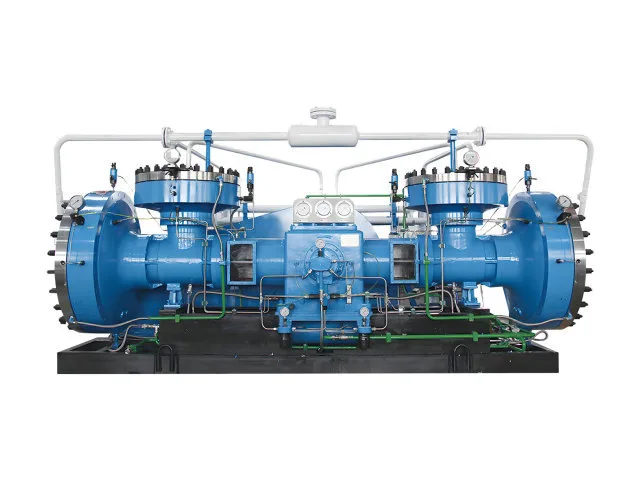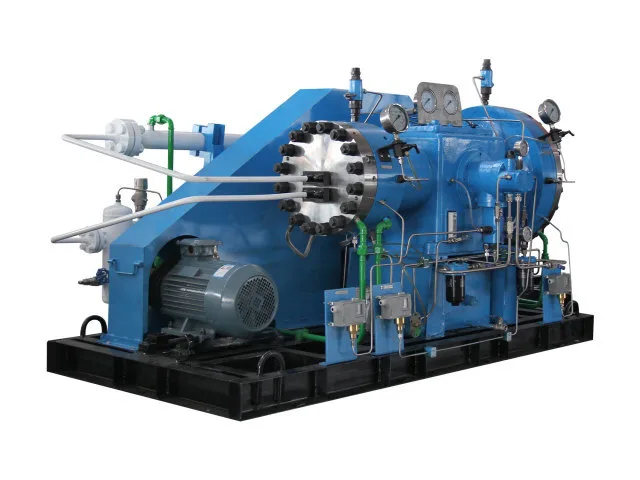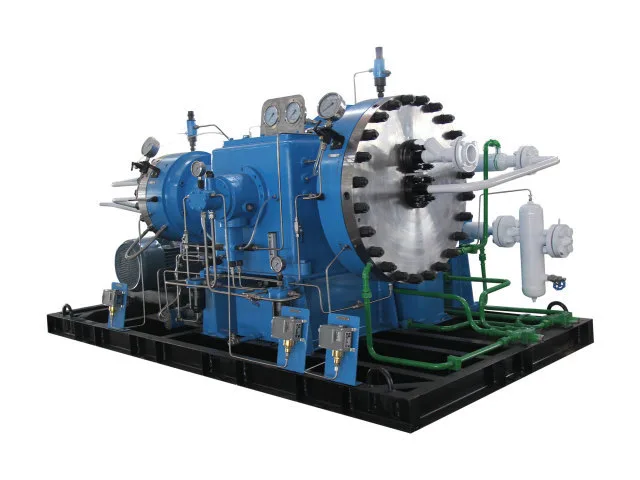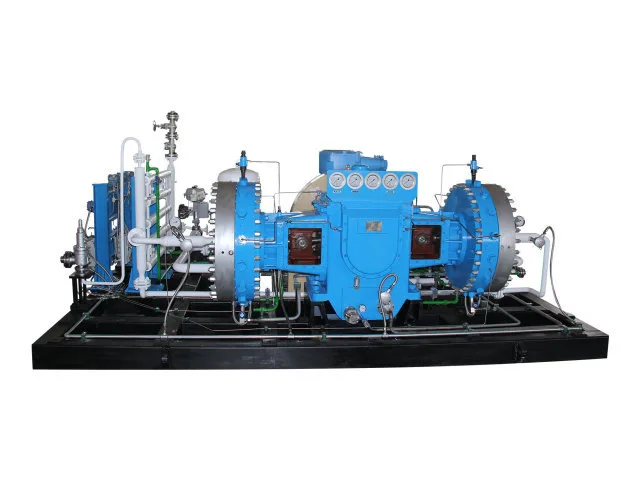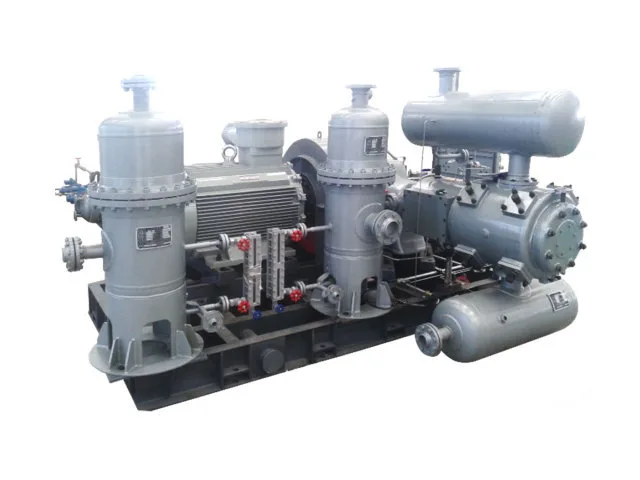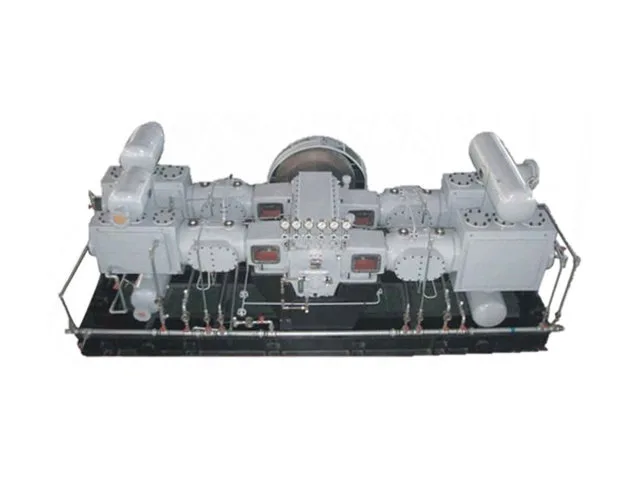
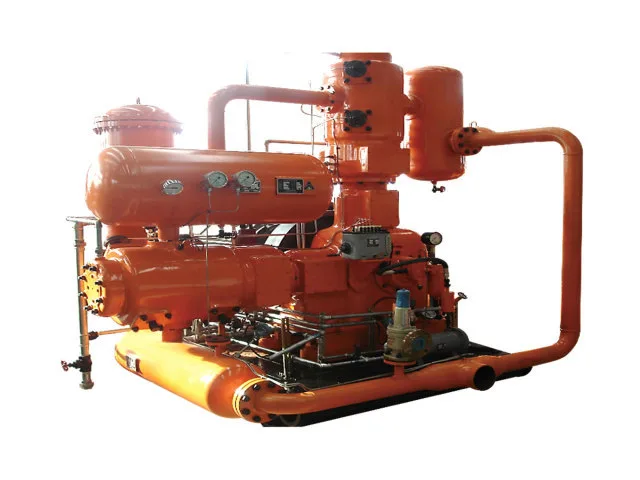
The L Type Piston Compressor is a reciprocating compressor developed for petrochemical gas service. Its mechanical arrangement uses an integral machine body, a ductile iron crankshaft and a positive lubrication system for the transmission components. The piston and crosshead are connected by a threaded structure.
The series can be configured for up to two stages of compression. Depending on the selected model and the gas being compressed, the cylinder can operate with oil-free or oil-lubricated arrangements.
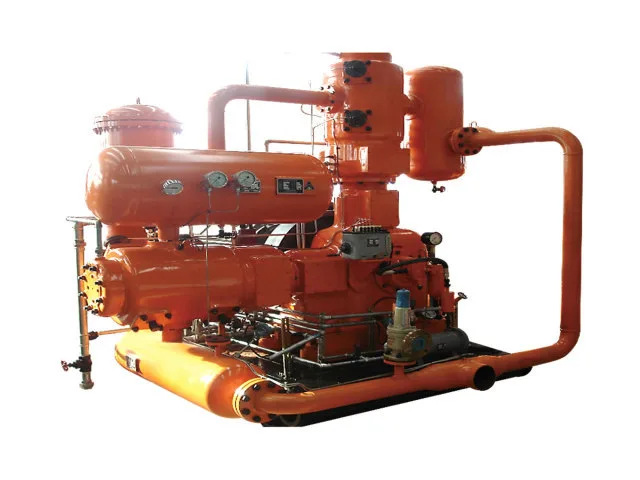
The main body forms the structural base of the compressor. The crankshaft, connecting rod mechanism and other moving components operate within an integrated machine structure.
The crankshaft is manufactured from ductile iron and transfers the motor's rotary movement to the reciprocating compression mechanism.
The lubrication system serves the mechanical components involved in continuous reciprocating operation and forms part of the normal operating system of the compressor.
A threaded connection is used between the piston and crosshead. This is part of the mechanical arrangement used in the L-type compressor structure and supports the assembly of the reciprocating components.
The L Type Piston Compressor is built within the following general design range:
· Stroke: 180–240 mm
· Speed: 420–590 r/min
· Rated piston rod tension: 42–68 kN
· Rated piston rod load: 42–68 kN
· Driving power: 75–280 kW
· Maximum compression stages: 2
· Main application field: Petrochemical industry
|
Model |
Inlet pressure |
Outlet pressure |
Nominal volumetric flow rate |
Cylinder lubrication method |
Power |
Speed |
|
L5.5W-135/2.5-6 |
0.25 |
0.6 |
135 |
Oil-free |
280 |
490 |
|
L5.5W-20/18 |
Atmospheric pressure |
1.8 |
20 |
Oil-free |
200 |
490 |
|
L5.5W-30/0.04-8 |
0.004 |
0.8 |
30 |
Oil-free |
200 |
490 |
|
L5.5W-21/1-40 |
0.1 |
4.0 |
21 |
Oil-free |
200 |
490 |
|
4L-65/-0.4-0.7 |
-0.04 |
0.07 |
65 |
There is oil |
132 |
420 |
|
4LW-50/2.5-9 |
0.25 |
0.9 |
50 |
Oil-free |
75 |
420 |
|
4LW-12/0.25-8 |
0.025 |
0.8 |
12 |
Oil-free |
75 |
420 |
|
4LW-13/1.5-9 |
0.15 |
0.9 |
13 |
Oil-free |
75 |
420 |
|
4LW-12/22 |
Atmospheric pressure |
2.2 |
12 |
Oil-free |
132 |
420 |
|
4LW-10.5/0.5-13 |
0.05 |
1.3 |
10.5 |
Oil-free |
110 |
420 |
Hydrogen compression requirements can vary according to flow rate, system pressure and downstream process conditions. Compressor selection should be based on the actual hydrogen operating parameters.
Petroleum gas, light hydrocarbons, rich gas and other process gases may require compression during production, transfer or process treatment.
Nitrogen can be compressed for industrial process supply and gas transfer applications.
The L-type compressor can be considered for process applications involving ethylene or propylene, subject to confirmation of the actual gas composition and operating requirements.
The available capacity and pressure range can also support industrial gas projects requiring a reciprocating compressor configuration.
Jinding has manufactured industrial compressors and acetylene production equipment since 1995.
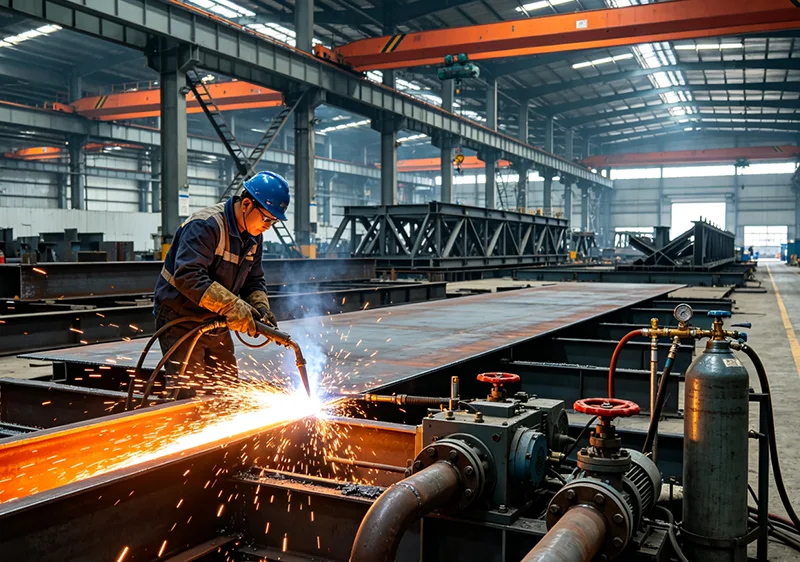
Its compressor product range includes diaphragm compressors, piston compressors and liquid-driven compressors. The company's production facilities cover machining, assembly, welding, painting, testing and technical development.
For L Type Piston Compressor projects, Jinding can provide support covering equipment selection, technical communication, manufacturing and follow-up service.
The series is intended for gases including hydrogen, nitrogen, petroleum gas, light hydrocarbon gas, ethylene, propylene, rich gas and analytical gas. The final selection should be confirmed according to the actual gas composition and process requirements.
The largest nominal volumetric flow in the provided model list is 135 Nm³/min.
No. Most of the listed models use oil-free cylinder lubrication, while the 4L-65/-0.4-0.7 model is listed with oil lubrication.
Yes. Several listed models use atmospheric pressure as the inlet condition.
Yes. The provided range includes low-pressure suction conditions and one model with an inlet pressure of -0.04 MPa(G).
The highest listed outlet pressure is 4.0 MPa(G).
The basic design specification allows for up to two compression stages.
Please provide the gas medium, inlet pressure, inlet temperature, outlet pressure, required gas flow and any special operating requirements.
Address
No. 21, Hengtong Road, Tongchi Town, Zhenxing District, Dandong City, Liaoning Province
Tel