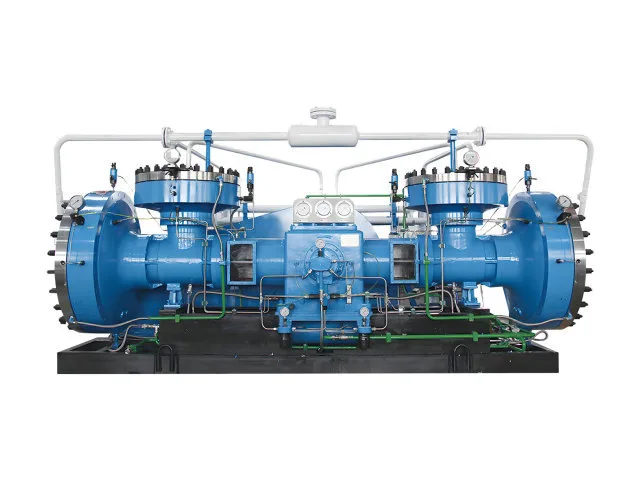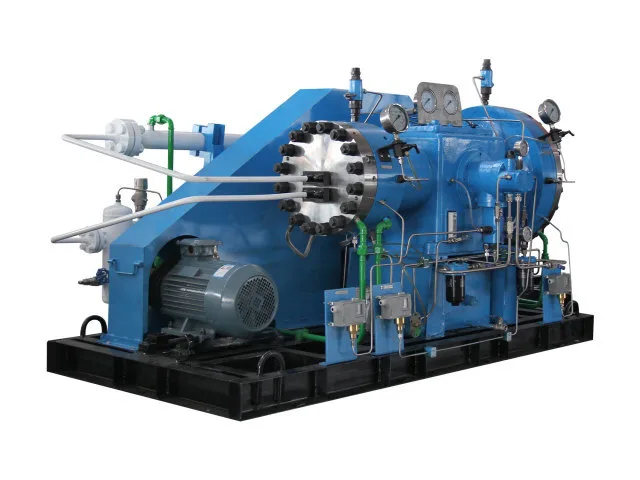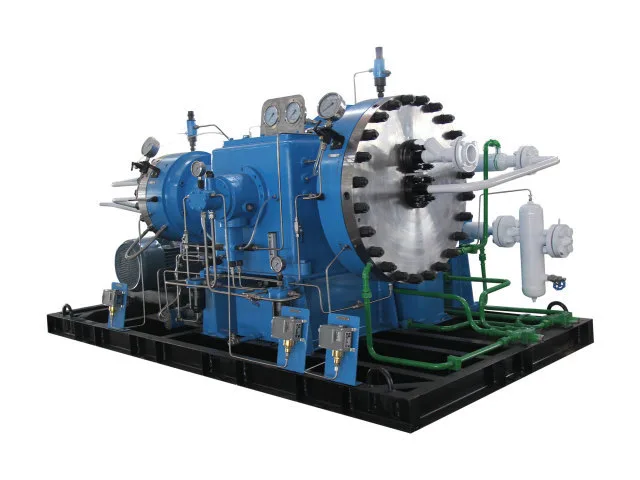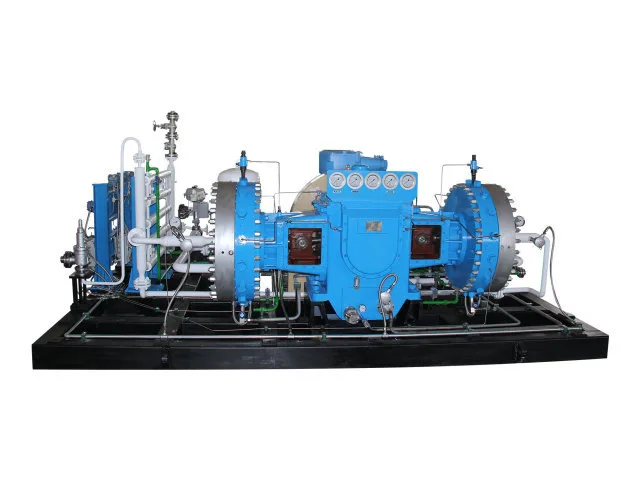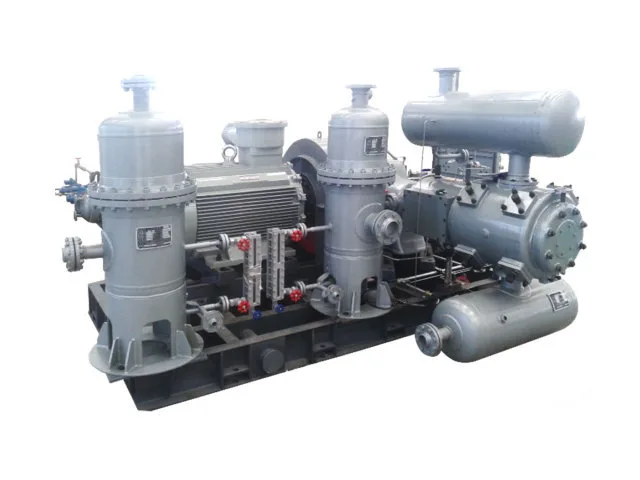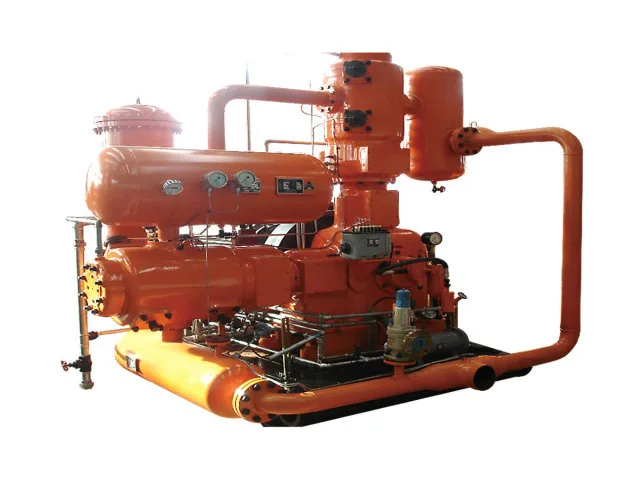
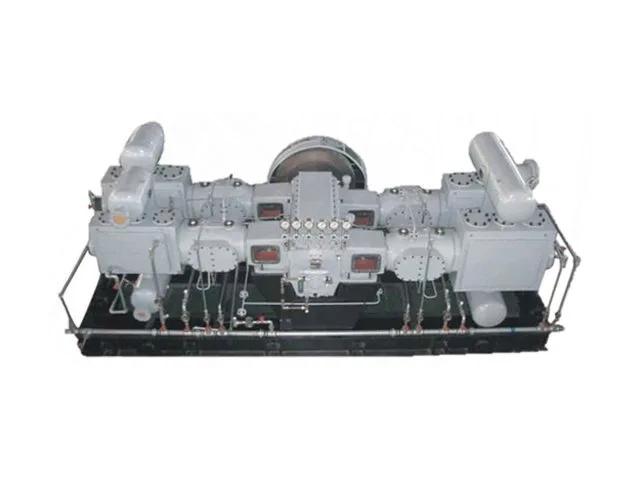
Rather than being limited to one fixed pressure or flow condition, the M Type Piston Compressor includes configurations for atmospheric suction, low-pressure gas intake, and pressurized process gas. Different cylinder arrangements can also be selected according to the required discharge pressure, gas properties, flow demand, and process conditions. The maximum compression level is four stages.
For petrochemical plants and industrial gas systems handling substantial gas volumes, compressor selection is usually determined by the complete operating duty rather than by pressure alone. The M Type range is therefore configured around the actual process requirements of each project.
|
Model |
Inlet pressure |
Outlet pressure |
Nominal volumetric flow rate |
Cylinder lubrication method |
Power |
Speed |
|
4M40-420/0.06-3 |
0.006 |
0.3 |
420 |
There is oil |
1800 |
330 |
|
4M32-117/0.2-40 |
0.02 |
4.0 |
117 |
There is oil |
1400 |
330 |
|
4M32W-270/16 |
Atmospheric pressure |
1.6 |
270 |
Oil-free |
2400 |
330 |
|
4M32W-100/80 |
Atmospheric pressure |
8.0 |
100 |
Oil-free |
1600 |
330 |
|
4M32W-343/6-57 |
0.6 |
5.7 |
343 |
Oil-free |
2300 |
330 |
|
4M32W-185/0.2-25 |
0.02 |
2.5 |
185 |
Oil-free |
1900 |
330 |
|
4M32W-1667/4.2-5.7 |
0.42 |
0.57 |
1667 |
Oil-free |
1600 |
330 |
|
4M25-156/26 |
Atmospheric pressure |
2.6 |
156 |
There is oil |
1600 |
370 |
|
4M25W-115/0.86-20 |
0.086 |
2.0 |
115 |
Oil-free |
1000 |
370 |
|
4M25-180/16 |
Atmospheric pressure |
1.6 |
180 |
There is oil |
1600 |
370 |
|
4M16-80/25 |
Atmospheric pressure |
2.5 |
80 |
There is oil |
900 |
370 |
|
4M16-79/0.1-33 |
0.01 |
3.3 |
79 |
There is oil |
900 |
370 |
|
4M16W-84/0.4-8.8 |
0.04 |
0.88 |
84 |
Oil-free |
560 |
370 |
|
4M10W-40/38 |
Atmospheric pressure |
3.8 |
40 |
Oil-free |
500 |
420 |
|
4M10W-57/0.1-16 |
0.01 |
1.6 |
57 |
Oil-free |
500 |
420 |
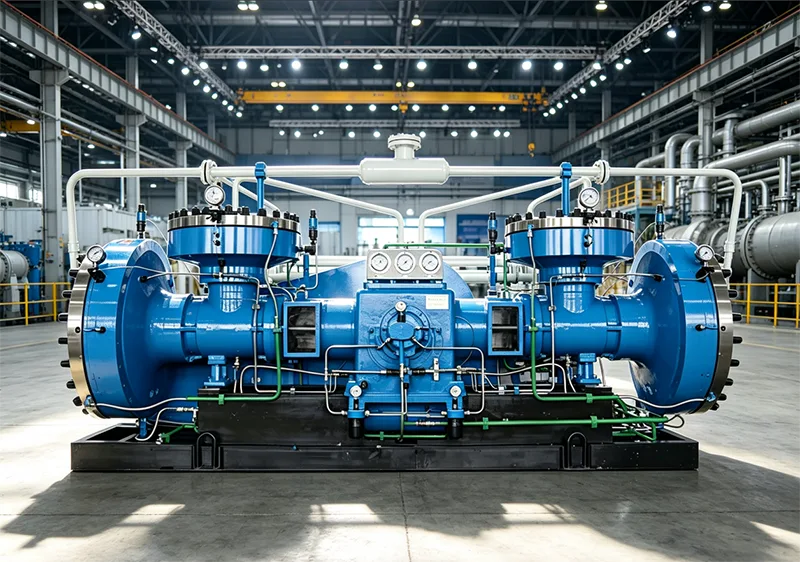
The symmetrical balance arrangement is one of the defining characteristics of the M Type Piston Compressor.
During reciprocating compression, the piston and connecting components continuously generate inertia forces. As compressor capacity and driving power increase, controlling these forces becomes increasingly important for the overall operation of the machine. The symmetrical arrangement helps balance the movement of the reciprocating components and supports smoother operation under large industrial compression loads.
Combined with the integral compressor body, this structural arrangement provides a stable mechanical foundation for high-power applications.
The forged steel crankshaft is used to withstand the transmission loads generated during continuous operation, while the semi-hydraulic connection between the piston and crosshead supports the transmission system used in larger compressor configurations.
The M Type uses an integral body structure to provide rigidity for the compressor assembly and support the alignment of the main mechanical components.
A forged steel crankshaft is used for the transmission system. This construction is suited to the load conditions associated with high-power gas compression.
Depending on the configuration, M Type compressors operate within a speed range of approximately 300 to 490 r/min. The selected speed is matched with the compressor model and process duty.
The transmission section adopts reverse lubrication technology to support the lubrication requirements of the moving mechanical components during operation.
The semi-hydraulic connection technology used between the piston and crosshead forms part of the compressor's heavy-duty mechanical arrangement.
Together, these structural features support stable operation in applications where the compressor may be required to handle large gas volumes and sustained industrial workloads.
The M Type Piston Compressor series includes both lubricated and oil-free cylinder configurations. The appropriate choice depends on the compressed gas, process requirements, downstream equipment, and gas cleanliness requirements.
|
Selection Factor |
Lubricated Cylinder Configuration |
Oil-Free Cylinder Configuration |
|
Cylinder lubrication |
Lubrication is used in the cylinder according to the compressor configuration |
Cylinder is configured for oil-free compression requirements |
|
Typical consideration |
Selected when the process conditions permit cylinder lubrication |
Selected when direct oil contamination of the process gas must be minimized |
|
Gas cleanliness requirement |
Depends on downstream process requirements |
Suitable for processes requiring an oil-free cylinder configuration |
|
Compressor selection |
Determined by gas properties and project conditions |
Determined by gas purity and process requirements |
|
Available in M Type series |
Yes, depending on model configuration |
Yes, depending on model configuration |
|
Purchasing consideration |
Gas compatibility, process conditions and maintenance requirements |
Gas cleanliness requirements and downstream process conditions |
The M Type series is intended for petrochemical and industrial gas compression duties involving a range of process media. Applicable gases may include:
Hydrogen: Used in hydrogen processing, refining and other industrial gas systems, with the configuration determined by the required flow rate and operating pressure.
Nitrogen: Applied in industrial gas supply, nitrogen transfer and petrochemical process systems where specific pressure and capacity requirements must be met.
Petroleum Gas: Used in petroleum gas compression and transfer, with equipment selection based on gas composition and operating conditions.
Light Hydrocarbon Gases: Suitable configurations may be considered for compressing light hydrocarbons according to their physical properties and process requirements.
Ethylene: Compression requirements depend on the required throughput, pressure ratio, gas properties and process conditions.
Propylene: Used in propylene processing and related petrochemical systems where the compressor must match the specified flow and pressure requirements.
Rich Gas: Applied in rich gas compression and process gas handling, subject to the gas composition and the operating conditions of the system.
Analytical and Other Specialty Gases: These applications require an assessment of gas composition, physical and chemical properties, material compatibility and any specific purity or safety requirements before equipment selection.
Large industrial compressors require more than ordinary product shipping. Equipment dimensions, weight, transportation conditions, lifting arrangements, and site access may all need to be considered before delivery.
For customers purchasing large piston compressors or complete gas compression systems, delivery planning can be coordinated with the equipment configuration and project requirements.
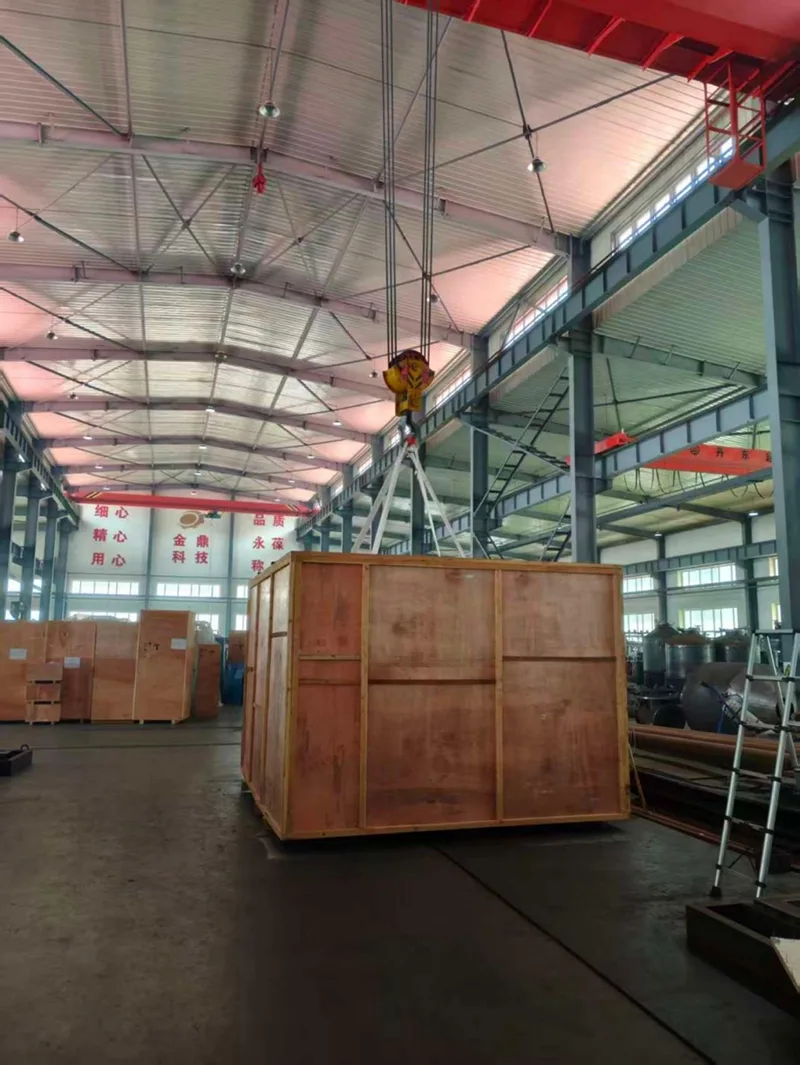
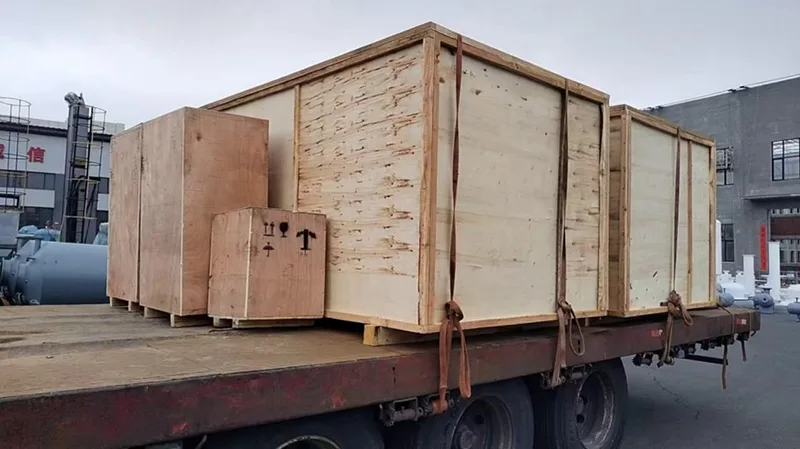
The M Type Piston Compressor is designed for industrial gas compression applications that require suitable flow capacity and pressure performance. Depending on the configuration, it can be used in chemical processing, petrochemical operations, gas processing and other industrial gas systems.
The applicable gas media depend on the compressor design, component materials, sealing arrangement and operating conditions. Customers should provide the gas composition and relevant properties to confirm material compatibility and equipment suitability.
Model selection should consider the required gas flow rate, inlet pressure, target discharge pressure, gas composition and operating conditions. Providing these parameters allows the engineering team to evaluate a suitable configuration.
The required number of stages depends on the pressure ratio, gas properties, discharge temperature limits and operating requirements. Multi-stage compression may be considered when the process requires a substantial pressure increase.
Lubrication requirements depend on the specific configuration. Customers should confirm whether the cylinder and other relevant components use oil-free or lubricated designs, particularly when process gas contamination must be controlled.
The cooling arrangement depends on the selected model, compression stages, gas properties and operating conditions. The appropriate cooling configuration should be confirmed during technical evaluation.
The equipment configuration can be evaluated according to project requirements, including gas composition, flow rate, inlet and discharge pressures, drive arrangement, materials and auxiliary systems. Final customization options depend on technical feasibility and the selected model.
Please provide the gas medium, required flow rate, inlet pressure, target discharge pressure, operating temperature, duty cycle, site conditions and any special safety or material requirements. These details help the engineering team assess the application and recommend a suitable configuration.
Address
No. 21, Hengtong Road, Tongchi Town, Zhenxing District, Dandong City, Liaoning Province
Tel