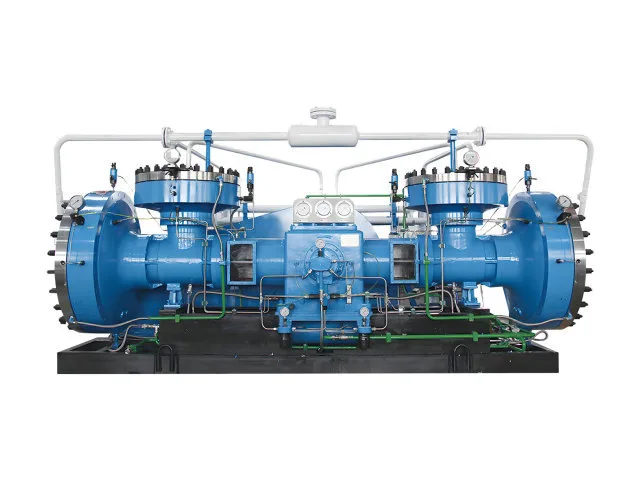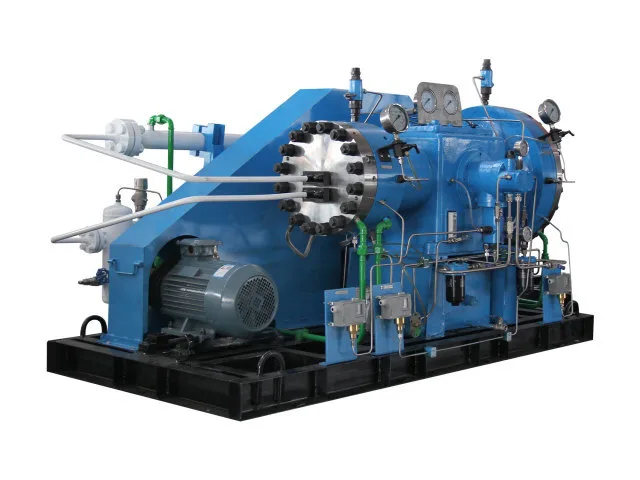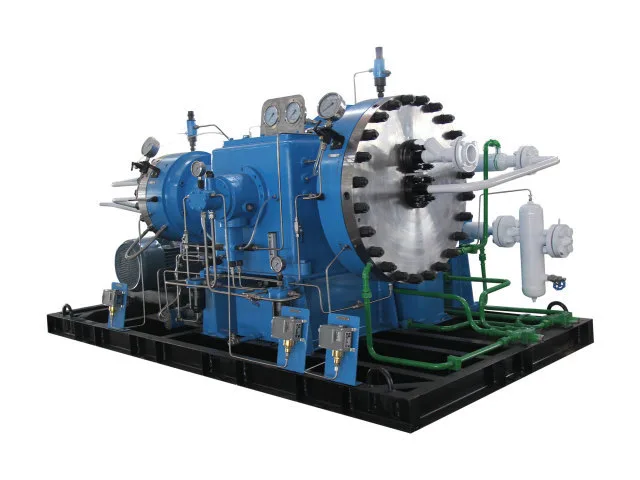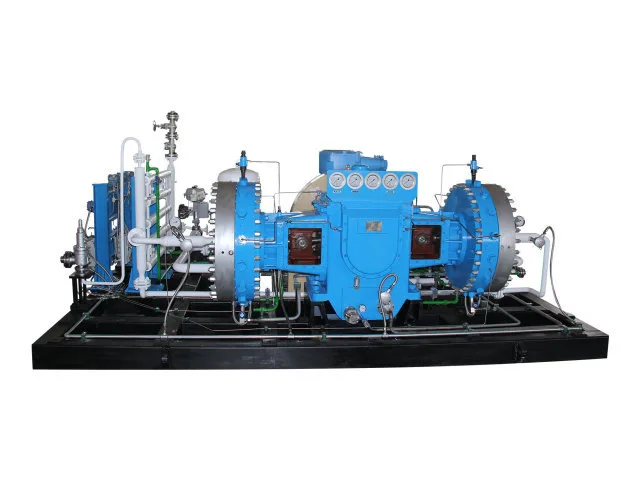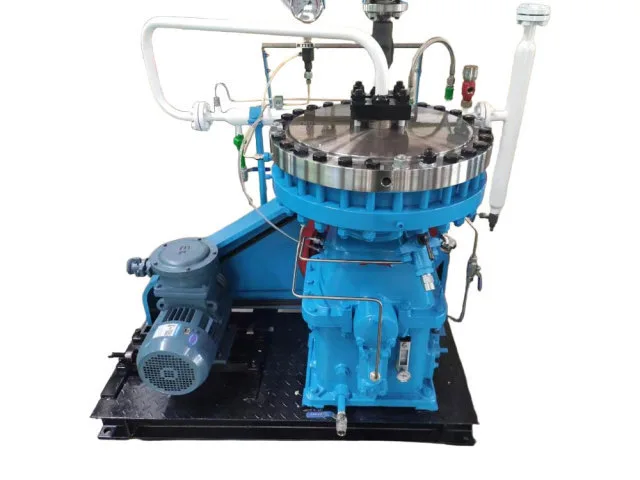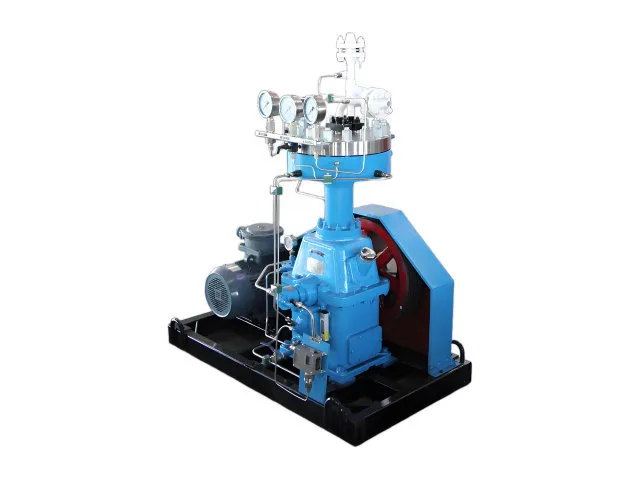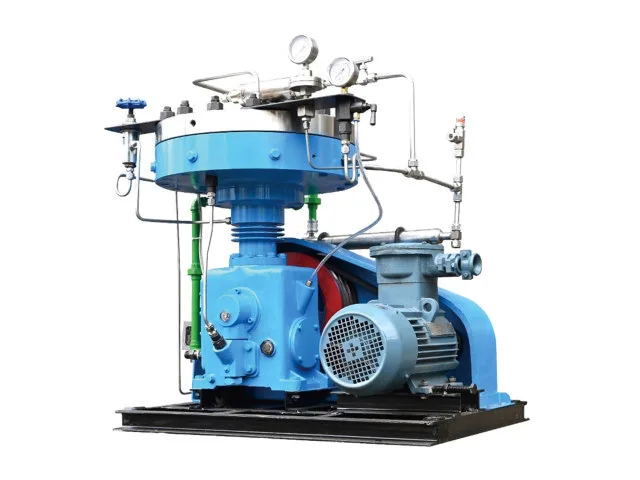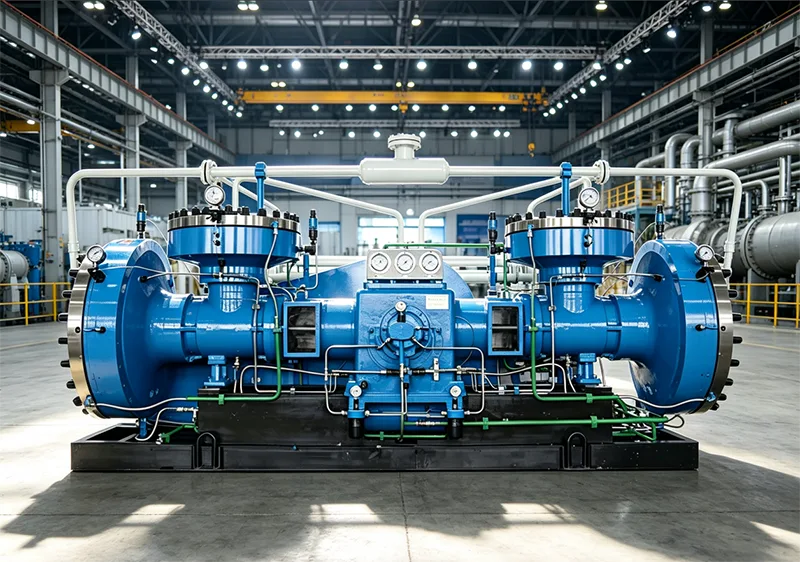
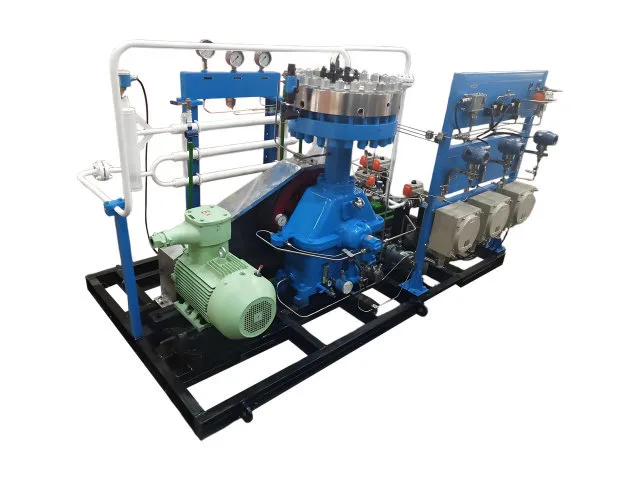
Gas compression in special-gas applications requires more than a suitable pressure ratio. The compression chamber must remain clean, the gas path must be properly sealed, and the hydraulic system must maintain the conditions required for diaphragm movement. GZ2 Diaphragm Compressor uses a Z-shaped, Level 1 configuration in which the motor drives the crankshaft and connecting rod, the piston acts on the hydraulic oil, and the hydraulic oil drives the diaphragm through its reciprocating movement. Intake and exhaust valves control the gas flow through each compression cycle, while the compensation oil system maintains the required oil volume in the cylinder.
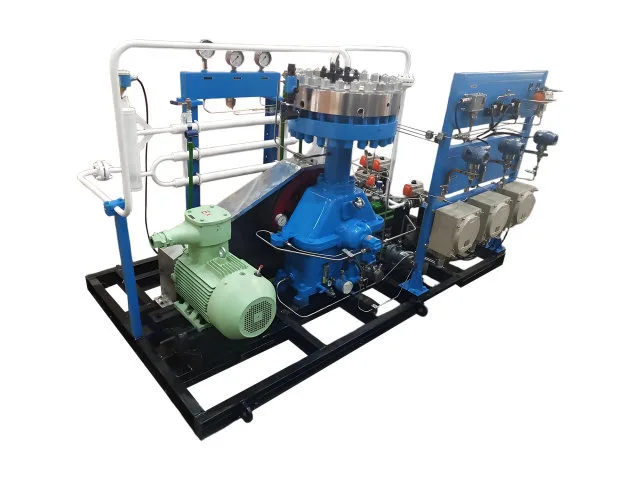
The motor transfers power to the crankshaft through a pulley. The crankshaft and connecting rod then convert rotary motion into reciprocating motion of the piston in the oil cylinder.
Movement of the piston changes the hydraulic oil pressure behind the diaphragm. The diaphragm follows this pressure change and moves back and forth inside the cylinder head. During the suction stroke, the gas chamber expands and draws in the medium through the intake valve. During the compression stroke, the chamber volume decreases and the gas is compressed before leaving through the exhaust valve.
The gas itself remains on the opposite side of the diaphragm from the hydraulic oil. This arrangement allows the mechanical drive and lubrication system to operate without placing lubricating oil directly in the compressed gas path.
A small amount of hydraulic oil can be lost during normal piston movement through the clearance around the piston ring, cylinder wall and ring groove. If this loss is not compensated, the hydraulic conditions required for proper diaphragm movement can gradually change.
GZ2 Diaphragm Compressor uses a compensation oil pump to replenish the oil during the diaphragm suction process. The pump supplies slightly more oil than the expected leakage amount. The excess oil is returned to the crankcase through a pressure regulating valve, which controls the oil pressure at the end of the compression stroke.
This oil compensation arrangement helps maintain the hydraulic oil volume and pressure required for stable diaphragm operation during continuous compressor service.
The diaphragm completely separates the cylinder from the oil cylinder. The compressed medium therefore does not directly contact lubricating oil, reducing the risk of oil contamination in the gas stream.
The compression chamber is formed by the cylinder head surface and diaphragm as a closed cavity. Together with the intake and exhaust valve arrangement, this provides a controlled gas path and good sealing performance.
These characteristics are particularly useful for gases whose purity, containment or compatibility must be carefully controlled, including high-purity, rare and valuable, corrosive, toxic, flammable and explosive gases.
|
Technical Item |
GZ2 Specification |
|
Product type |
Diaphragm Compressor |
|
Structural form |
Z-shaped |
|
Compression level |
Level 1 |
|
Cooling method |
Circulating water cooling |
|
Working voltage |
380V |
|
Compression method |
Reciprocating diaphragm compression |
|
Compressed media |
High-purity gas, inert gas, flammable and explosive gas, toxic gas, special gas |
|
Pressure measurement |
Intake pressure and exhaust pressure |
|
Gas and oil separation |
Diaphragm separation |
|
Gas chamber |
Closed compression cavity |
|
Hydraulic system |
Oil cylinder with compensation oil pump |
|
Oil pressure control |
Pressure regulating valve |
|
Gas valve control |
Intake and exhaust valves |
GZ2 Diaphragm Compressor fits gas systems where the compression process must maintain a clean gas path and controlled containment. The diaphragm separates the compressed medium from the hydraulic oil, making the compressor suitable for applications involving high-purity and specialty gases as well as selected hazardous or corrosive media.
Common service areas include high-purity gas supply, specialty gas processing, rare and valuable gas handling, chemical and petrochemical production, laboratory gas systems, gas testing equipment, and high-pressure gas processes. For flammable, explosive, toxic or corrosive gases, the final configuration should be confirmed against the actual gas composition and operating conditions.
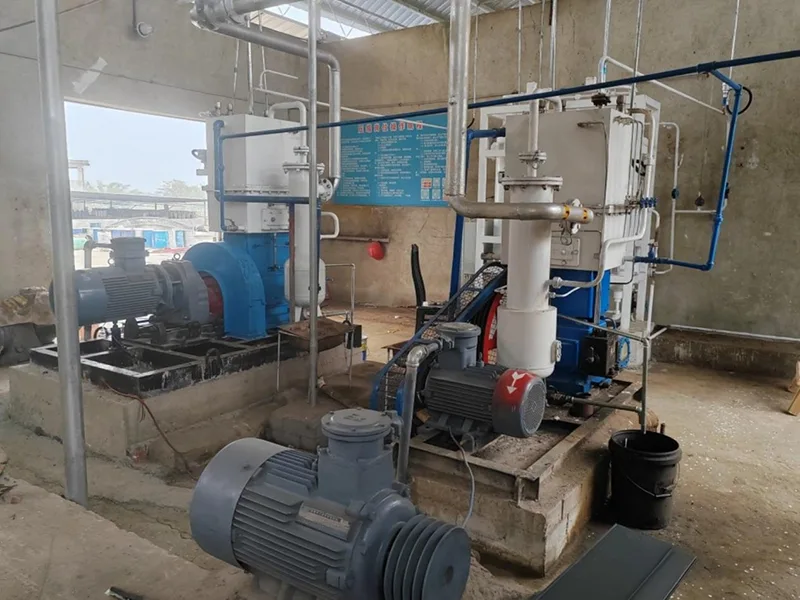
When requesting a GZ2 Diaphragm Compressor from Jinding, please provide the following operating information:
Intake pressure and intake temperature
Required exhaust pressure
Required volumetric flow rate
Compressed medium
Operating and installation requirements
Gas composition and physical/chemical properties for special media
For gases with corrosive, toxic, flammable, explosive or otherwise unusual characteristics, complete medium information is important for evaluating material compatibility and the appropriate compressor configuration.
The diaphragm forms a complete barrier between the gas chamber and the oil cylinder. The gas remains in the compression chamber and does not directly contact the hydraulic and lubricating oil.
A small amount of oil can be lost from the oil cylinder during normal piston operation. The compensation oil pump replenishes this loss and supplies slightly more oil than the expected leakage. Excess oil is returned through the pressure regulating valve.
Yes. The diaphragm separates the compressed gas from the lubrication system, helping prevent lubricating oil from entering the gas path. This makes GZ2 suitable for many high-purity and specialty gas applications.
The specified media include high-purity gases, inert gases, flammable and explosive gases, toxic gases and other special gases. Rare, valuable, corrosive and high-pressure gases can also be considered after checking their specific properties.
Yes. GZ2 uses a Level 1 single-stage configuration with a Z-shaped structural arrangement.
Jinding needs the inlet pressure and temperature, exhaust pressure, required flow rate, gas composition and operating requirements. For special gases, physical and chemical property data should also be provided so that the compressor configuration can be properly evaluated.
Address
No. 21, Hengtong Road, Tongchi Town, Zhenxing District, Dandong City, Liaoning Province
Tel